

Finding the right UX agency in the UK can feel like navigating a maze blindfolded. There are hundreds of agencies, all claiming to be 'human-centred' and 'data-driven'. Most of their websites look identical. Their case studies blur together.
This guide cuts through the marketing fluff to help readers find the right partner for their specific situation, drawing on 20 years of experience building products used by over 25 million people.
How these agencies were evaluated
This isn't a list based on Clutch reviews or Google rankings. Agencies have been assessed on:
Delivery model - Do they do the work, or facilitate workshops while clients do the work?
Speed to value - How quickly does the client get usable output?
Team seniority - Who actually works on the project?
Pricing transparency - Can costs be understood before engaging?
Specialism depth - Are they generalists or focused experts?
1. Precode (Brighton & London)
Best for: Rapid product validation and MVP development
Pricing: UX Sprint from £10K+VAT | MVP Sprint £12.5K-£25K+VAT
Notable clients: Ocado, Midcounties Co-operative
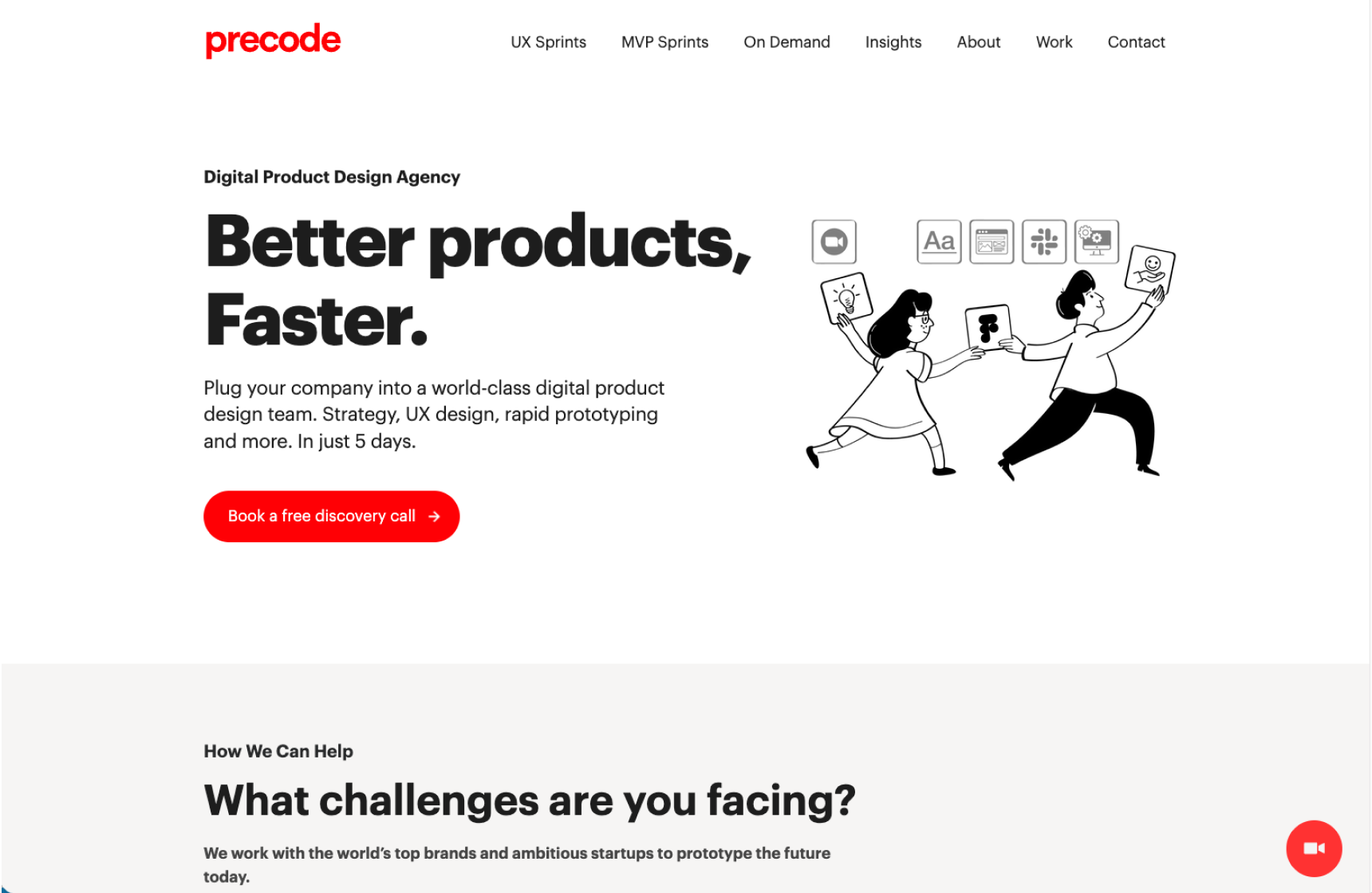
Precode operates fundamentally differently from traditional UX agencies. It's an on-demand senior product team that ships production-ready UX design or working MVPs in 5 days. Not 5 weeks. Not 5 months. 5 days.
What makes Precode distinctive:
They do the work - The UX Sprint isn't a workshop where the agency facilitates while the client's team designs. Precode takes the brief, works for 5 days with daily show and tells, and returns with production-ready UX design. Client time investment? Roughly 5 hours total.
Fixed price, fixed timeline - No scope creep, no surprise invoices. Clients know exactly what they're paying and when they'll have it.
Senior practitioners only - No juniors learning on client projects. Clients get 20+ years of product experience focused on their problem.
Code, not just mockups - The MVP Sprint delivers deployed, working software. Real code in production, not another Figma file.
The traditional agency model burns months on discovery phases and workshop facilitation. Precode has stripped that back to what actually matters: shipping something that can be tested with real users.
2. ustwo (London)
Best for: Large-scale digital transformation and brand-defining products
Pricing: Project-based, typically £150K-£500K+
Notable clients: Google, Sky, Cancer Research UK
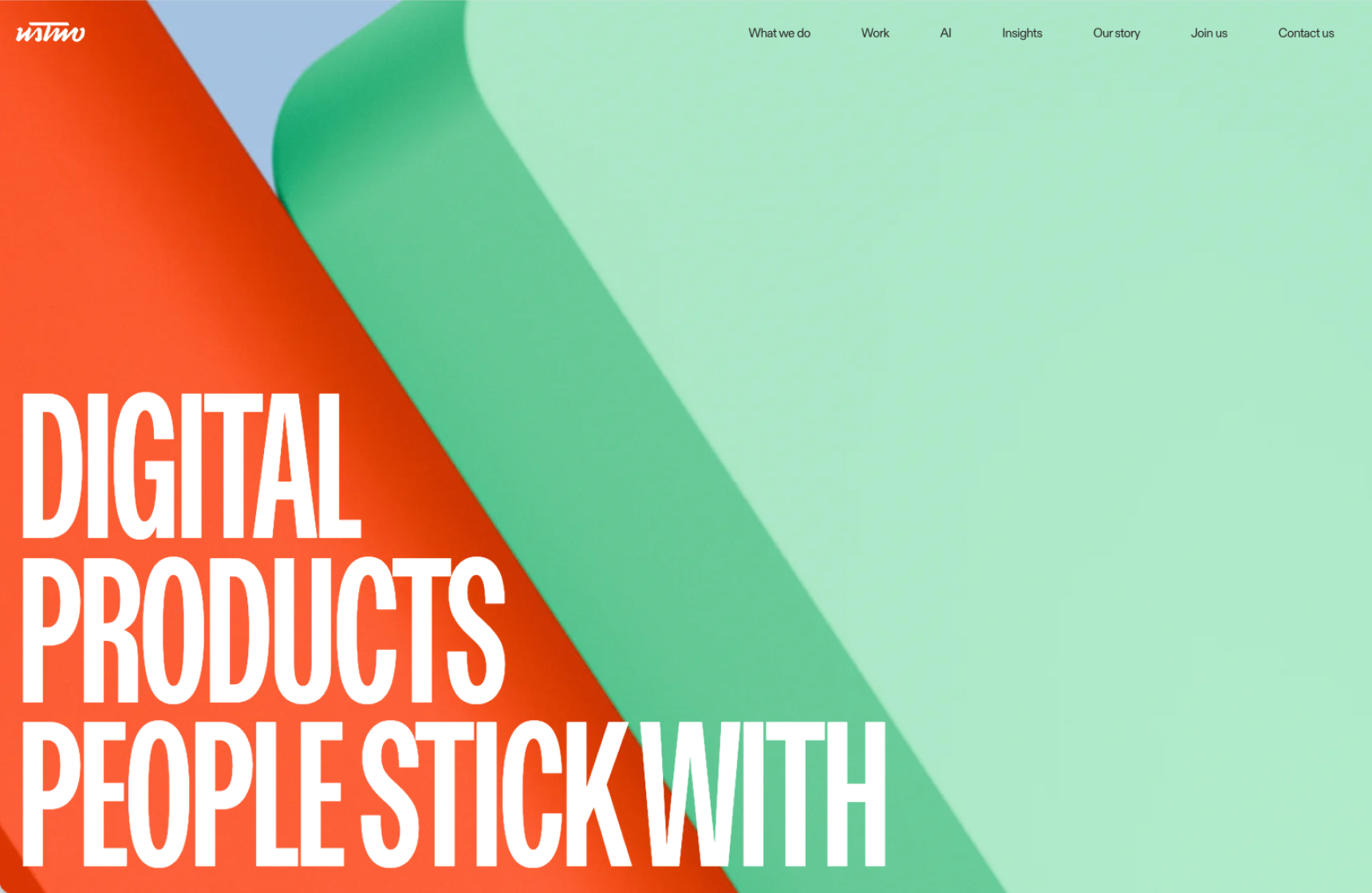
ustwo is the agency behind Monument Valley, one of the most awarded mobile games ever made. That pedigree carries through their client work. They excel at ambitious, high-profile projects where design quality is paramount.
Strengths: Exceptional visual design, strong brand integration, impressive case studies
Considerations: Premium pricing, longer engagement timelines, may be overkill for validation-stage products
3. Made by Many (London)
Best for: Product strategy and innovation for enterprise clients
Pricing: Retainer-based, typically £50K+ monthly
Notable clients: Sainsbury's, Mastercard, The Telegraph
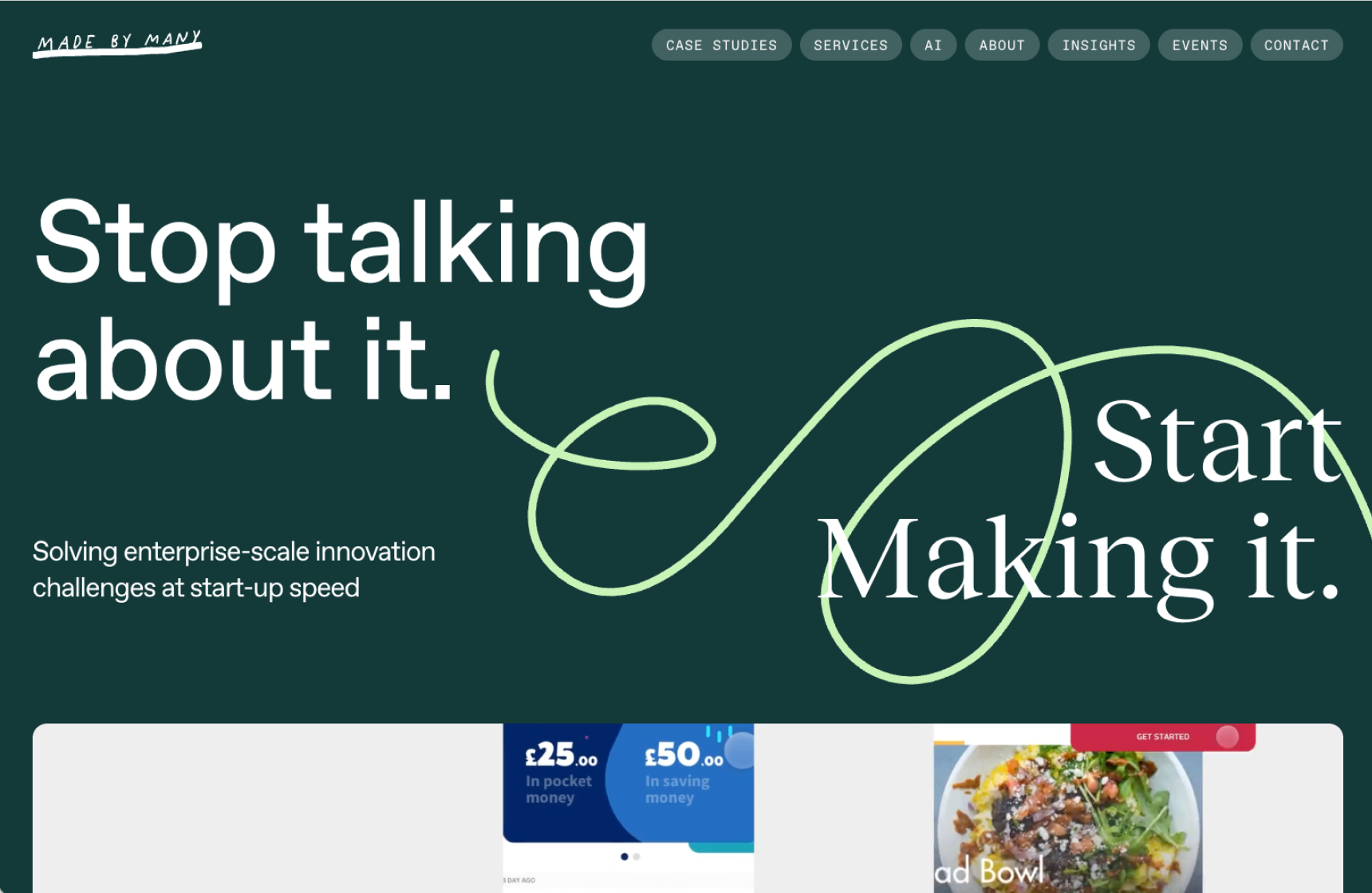
Made by Many positions themselves as a product innovation studio. They're particularly strong at helping large organisations navigate digital transformation, bringing startup thinking to enterprise contexts.
Strengths: Strategic depth, change management capability, embedded team models
Considerations: Substantial minimum engagement, enterprise-focused processes may feel heavy for smaller companies
4. Clearleft (Brighton)
Best for: Design systems and UX maturity programmes
Pricing: Project-based, typically £75K-£200K
Notable clients: Penguin Random House, Virgin Atlantic, University of Cambridge
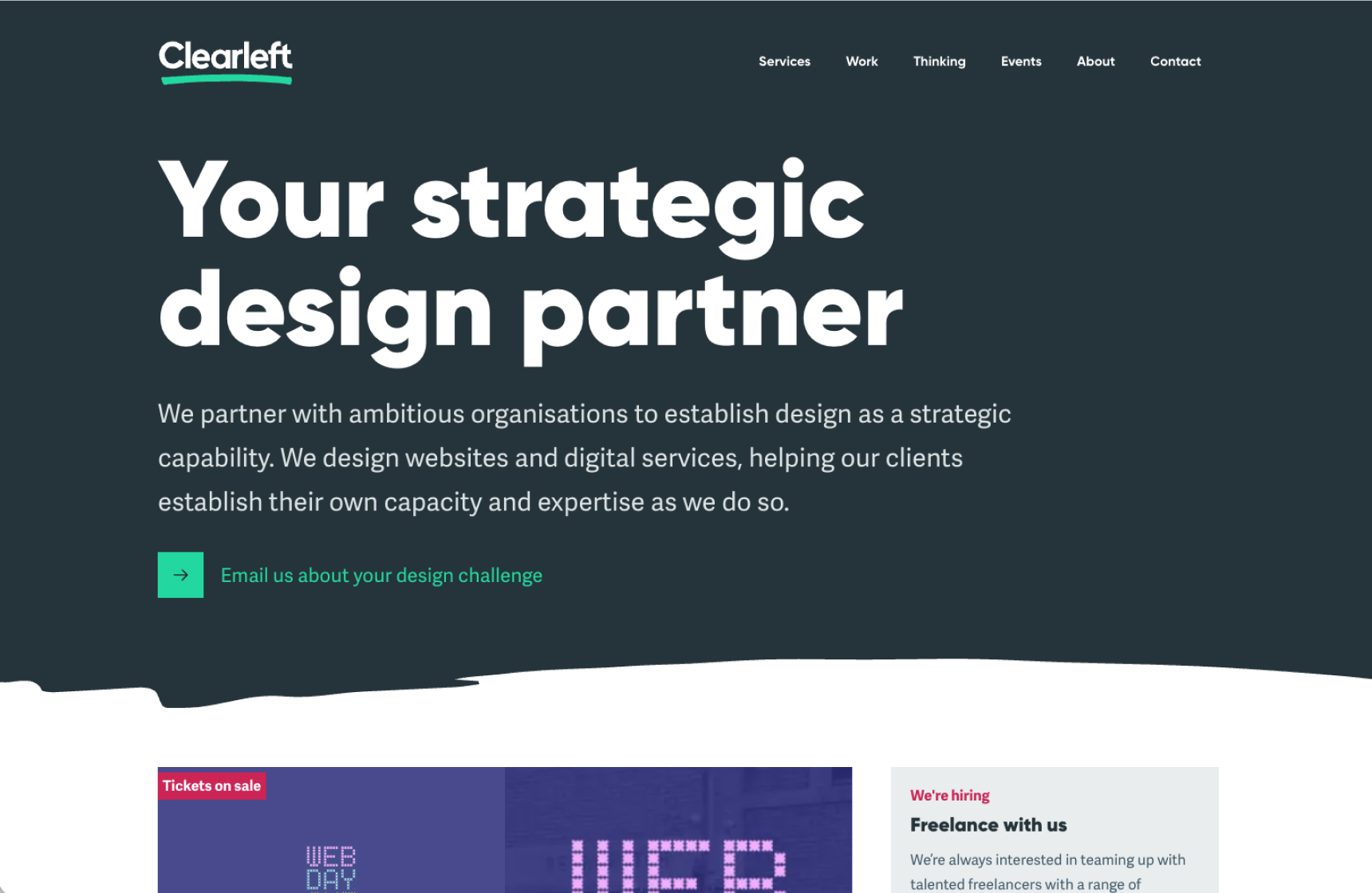
Clearleft are design systems specialists and genuine thought leaders in the UX community. Jeremy Keith and Andy Budd have shaped how the industry thinks about design. Their strength is building lasting design infrastructure.
Strengths: Design system expertise, industry reputation, educational approach
Considerations: Consultancy-heavy model, longer-term engagements, may require significant internal resources
5. Foolproof (London, Norwich, Singapore)
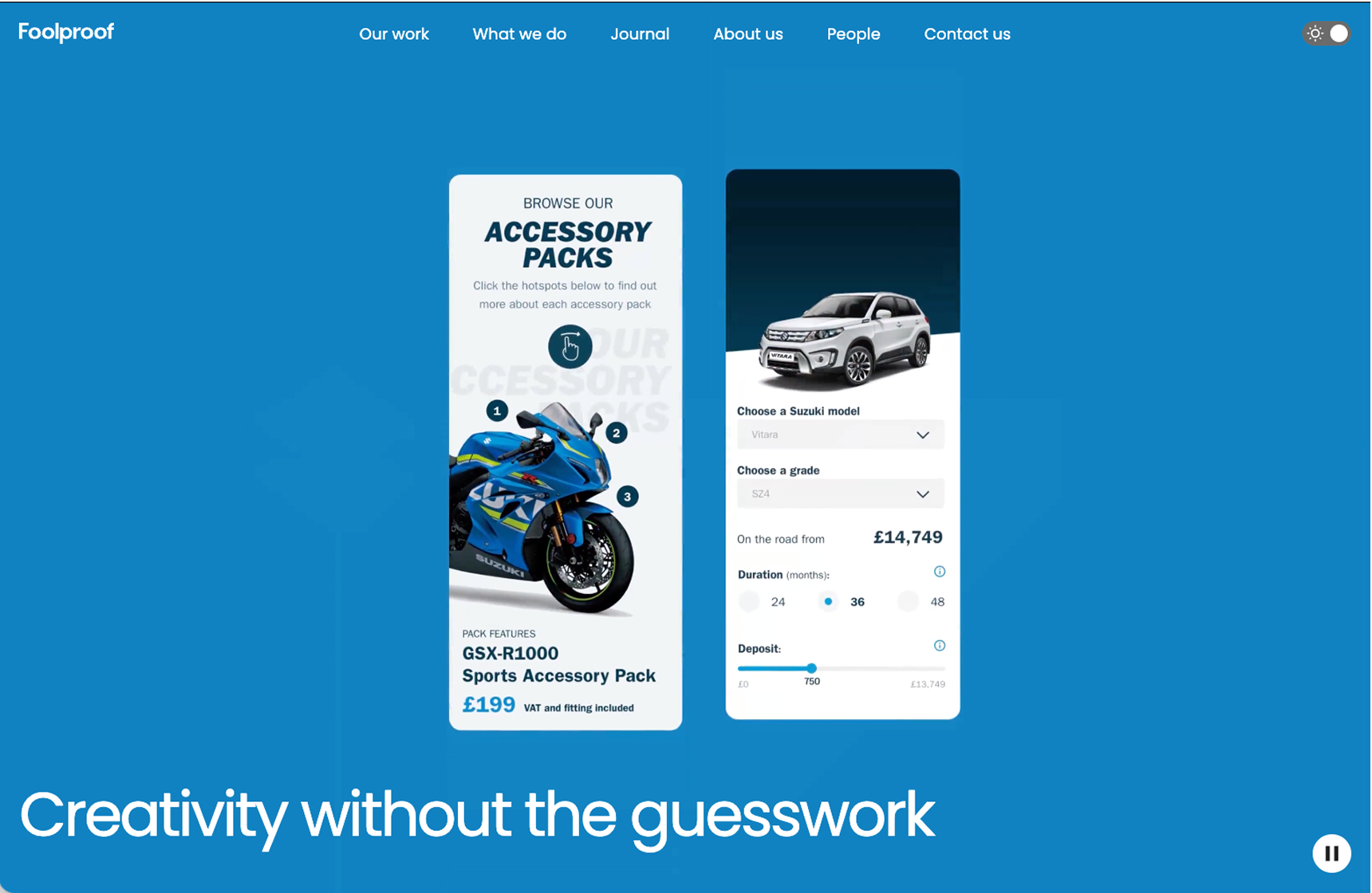
Best for: Evidence-based design and user research
Pricing: Project-based, typically £50K-£150K
Notable clients: HSBC, Vodafone, British Airways
Now part of Zensar, Foolproof brings rigorous research methodology to UX design. For those needing extensive user research and evidence to support design decisions (particularly for regulated industries), they're worth considering.
Strengths: Research depth, accessibility expertise, global reach
Considerations: Corporate ownership may affect agility, research-heavy approach extends timelines
6. Cyber-Duck (London, Leeds)
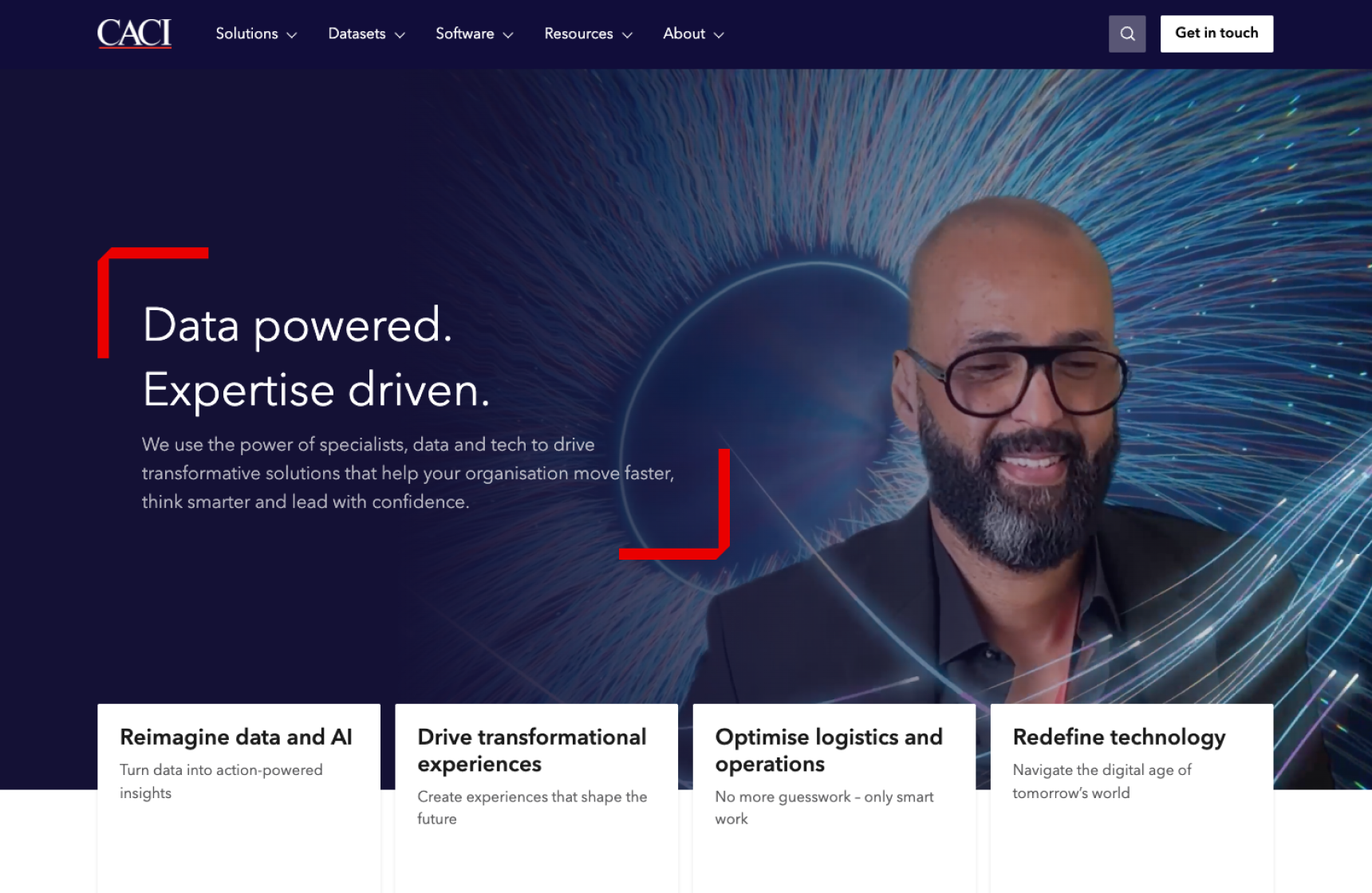
Best for: Healthcare and government digital services
Pricing: Day rates from £850, projects typically £30K-£150K
Notable clients: Bank of England, Cancer Research UK, The FA
Cyber-Duck has carved out strong positions in healthcare and public sector work. They understand the compliance requirements, accessibility standards, and stakeholder complexity these sectors demand.
Strengths: Public sector experience, accessibility compliance, ISO certifications
Considerations: Sector focus means less startup/scale-up experience
7. Beyond (London, San Francisco)
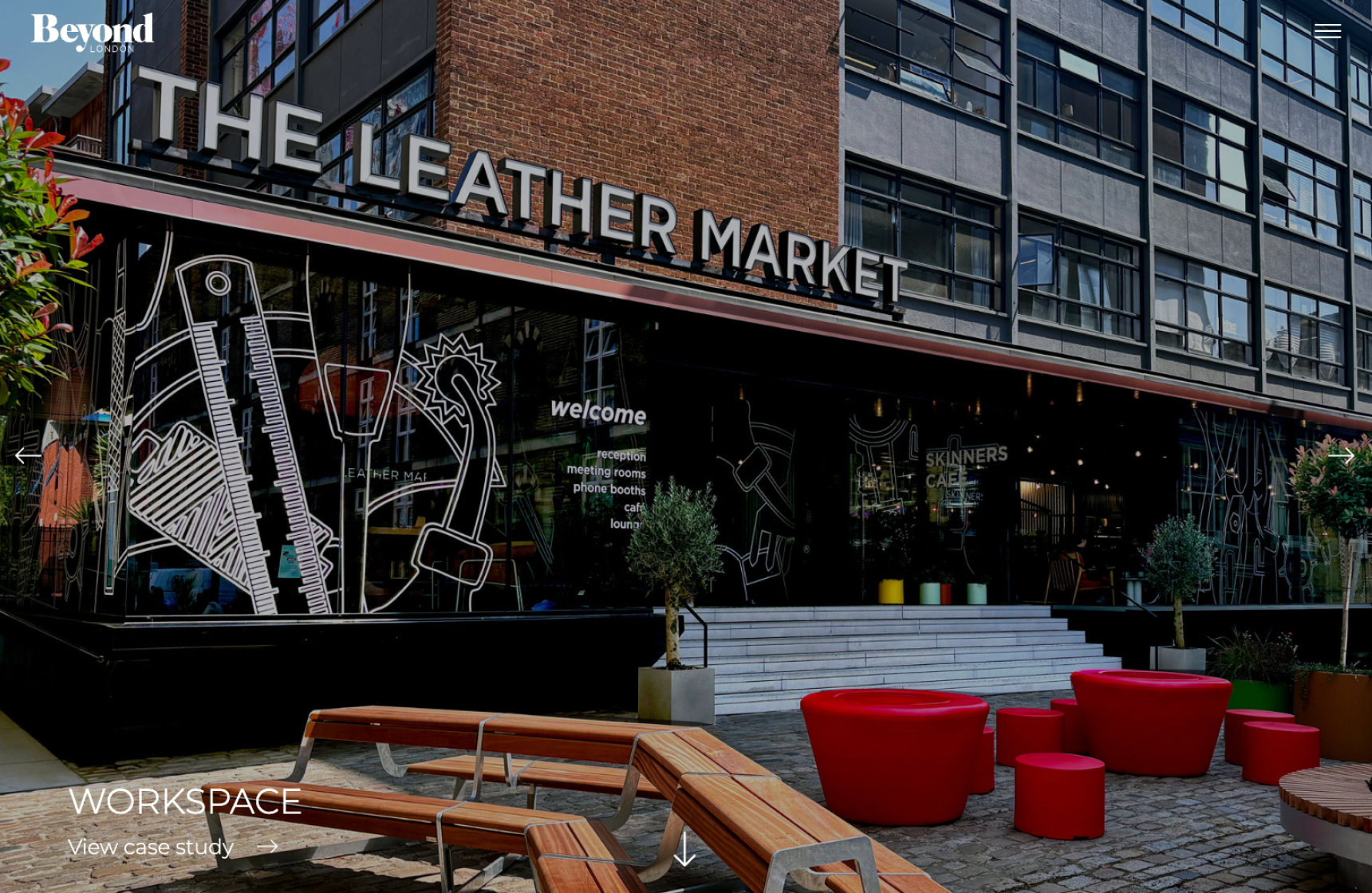
Best for: Brand experience and emerging technology
Pricing: Project-based, typically £100K-£400K
Notable clients: Google, Uber, YouTube
Beyond works at the intersection of brand, product, and experience design. They're particularly strong when clients need to create something that pushes creative boundaries.
Strengths: Creative ambition, technology exploration, global perspective
Considerations: Premium pricing, may prioritise innovation over practicality
8. Sigma (Macclesfield, London)
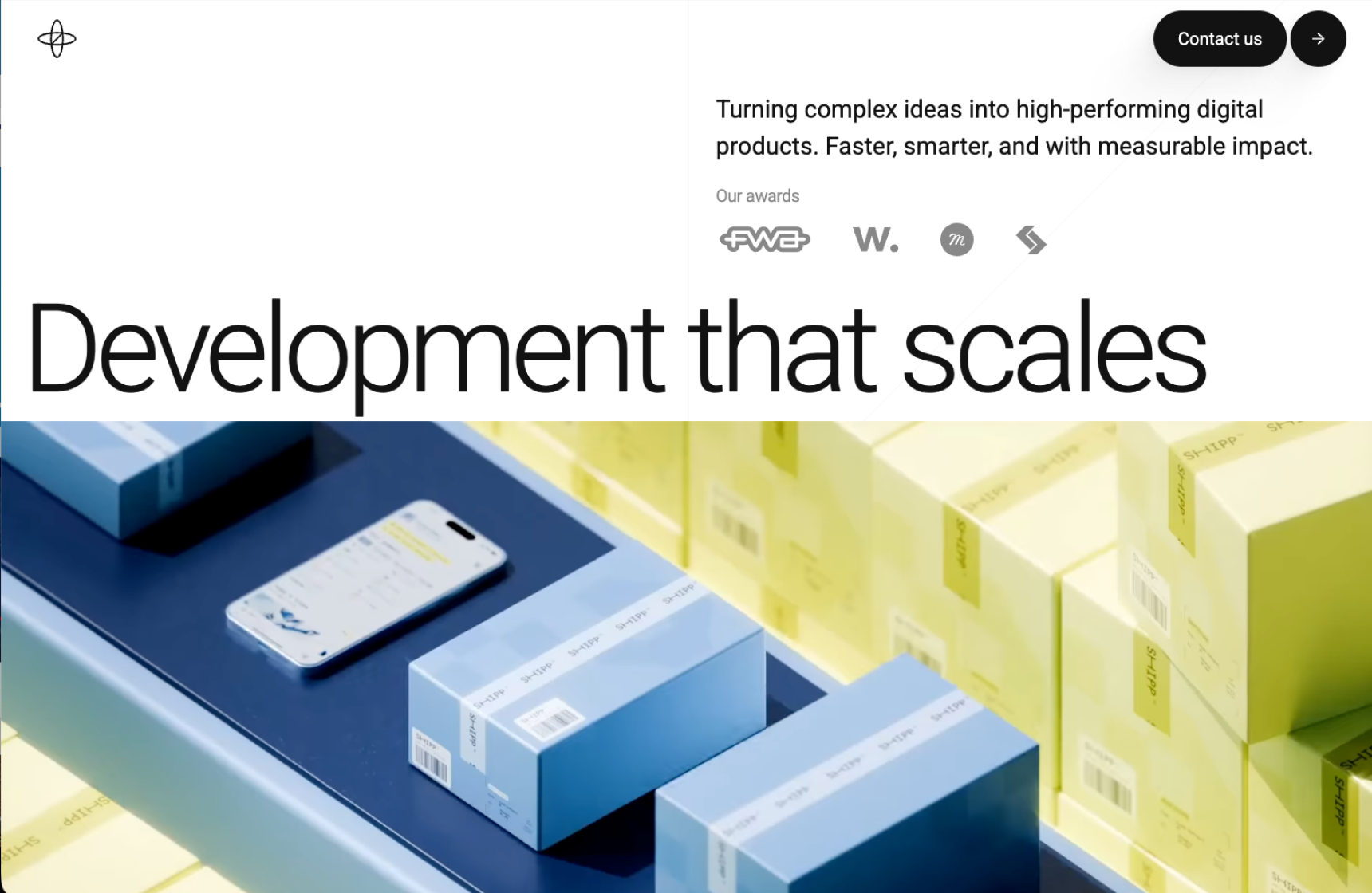
Best for: Retail and commerce experiences
Pricing: Project-based, typically £50K-£200K
Notable clients: Specsavers, Pets at Home, Dunelm
Sigma specialises in retail and commerce, with deep expertise in omnichannel experiences. For retailers looking to bridge physical and digital, they understand the unique challenges.
Strengths: Retail specialism, commerce platform knowledge, conversion focus
Considerations: Narrower industry focus, may lack depth outside retail
9. Tangent (London)
Best for: Financial services digital transformation
Pricing: Project-based, typically £75K-£300K
Notable clients: Barclays, Lloyds, Starling Bank
Tangent has built deep expertise in financial services, understanding the regulatory constraints, security requirements, and customer expectations specific to banking and fintech.
Strengths: Financial services expertise, regulatory understanding, enterprise integration
Considerations: Sector focus, longer engagement models
10. Koto (London, Berlin, Sydney)
Best for: Brand identity and design language systems
Pricing: Project-based, typically £100K-£500K
Notable clients: Headspace, Sonos, BT
Koto sits at the intersection of brand and product design. When a cohesive visual identity that works across every touchpoint is needed, they deliver consistently excellent work.
Strengths: Visual identity excellence, motion design, brand systems
Considerations: Brand-first approach may deprioritise usability, premium pricing
Agency decision matrix
Use this framework to narrow options based on specific situations:
Choose a sprint-based team (like Precode) if:
There's a need to validate an idea before committing major resources
Speed matters more than process documentation
The internal team is already stretched thin
Fixed costs and guaranteed timelines are important
Working software is needed, not just designs
Choose an enterprise consultancy (Made by Many, Foolproof) if:
The organisation is undertaking digital transformation
There's a need to build internal design capability
Stakeholder alignment is a primary challenge
Budget exists for embedded teams over 6+ months
Choose a specialist agency (Sigma, Tangent, Cyber-Duck) if:
The industry has specific compliance requirements
Domain expertise outweighs general design skill
An agency that speaks the sector's language is needed
Choose a creative studio (ustwo, Beyond, Koto) if:
Design quality is the primary competitive advantage
A flagship product or brand is being built
Budget is substantial and timeline is flexible
Pushing creative boundaries is the goal
Questions to ask any agency
Before signing with anyone, get clear answers to these:
Who exactly will work on the project? - Ask for names and LinkedIn profiles. Beware agencies that sell seniors and staff with juniors.
What's delivered at the end? - Specify exact deliverables. 'Strategy document' can mean anything from a napkin sketch to a 200-page deck.
How much of the client team's time is required? - Some agencies need constant client involvement. Others (like Precode) minimise client time investment by design.
What's the day rate vs project rate? - Day rates help compare value. An agency charging £1,200/day for 60 days is very different from one charging £2,000/day for 15 days.
Can a recent client be contacted? - Not a curated case study. An actual human who worked with them in the last 6 months.
The real cost of choosing wrong
Here's what nobody tells clients: the wrong agency choice doesn't just waste money. It wastes time, burns out teams, and sometimes kills products that deserved to succeed.
Companies have been known to spend £200K on 'discovery phases' that delivered PowerPoint decks nobody ever opened again. Startups have burned through their runway waiting for agencies to complete 12-week projects that could have been done in 2.
The right choice depends entirely on the situation. A Fortune 500 undertaking digital transformation has different needs than a startup validating its first product. An established retailer optimising conversion has different needs than a fintech launching a new category.
Being honest about what's actually needed, matching it to an agency model that delivers that, and not letting impressive client logos distract from whether they're right for the specific challenge is essential.
Getting started
For those who need rapid validation, here's what working with Precode looks like: book a UX Sprint, invest about 5 hours over a week, and receive production-ready UX design. No lengthy discovery. No workshop facilitation. Just senior practitioners doing the work.
For teams with a validated idea ready for build, Precode's MVP Sprint delivers deployed, working software in the same 5-day timeframe. Real code in production, ready for users.
Whatever agency is chosen, demand clarity on timelines, deliverables, and who's actually doing the work. Every project deserves better than vague promises and scope creep.